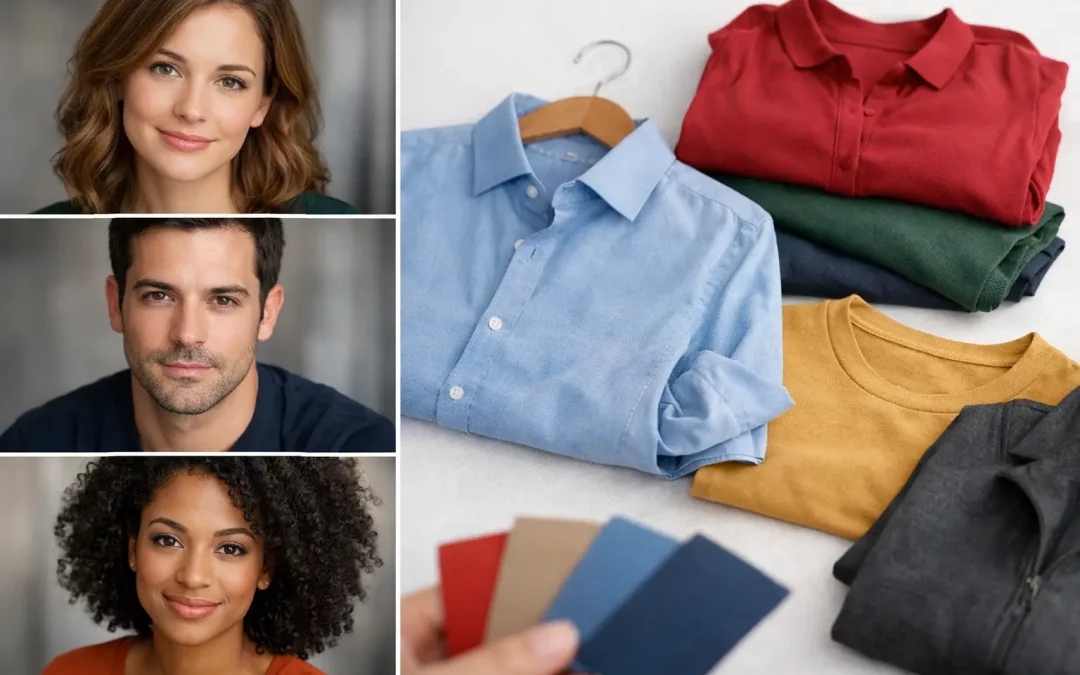
A brilliant actor headshot needs to make the casting team look at you, not your clothes. That is why choosing the best colours for actor headshots is less about following fashion and more about finding shades that support your face, your energy and the roles you are right for. The right top can bring warmth to your complexion, define your eyes and make an image feel clear at a glance on Spotlight.
The best colours for actor headshots keep the focus on you
For most actors, plain, mid-toned colours are the safest and most flattering place to begin. Think navy, charcoal, petrol blue, forest green, burgundy, rust, soft teal or a rich berry shade. These colours tend to hold their own against a neutral studio background without competing with your features.
Mid-tones matter because very pale shades can lose definition under studio lighting, while very dark clothes can create a heavy block at the bottom of the frame. Neither is automatically wrong. A white shirt can look wonderfully fresh on someone with strong colouring, and black can feel right for a particular casting direction. The question is whether the colour leaves your face looking alive and visible.
Casting professionals are usually scanning quickly. Your headshot should make it easy to read your expression, eye colour, age range and natural presence. A well-chosen colour gives the portrait enough shape and contrast to do that job beautifully.
Start with your skin tone, hair and eyes
There is no universal “best” headshot colour. The shades that make one actor look bright and approachable can make another look washed out. Rather than trying to label yourself by a strict colour season, look at what happens when you hold different tops near your face in daylight.
If your skin has warm or golden undertones, earthy and warm jewel shades often work particularly well. Olive, moss, warm navy, terracotta, chocolate, deep coral and burgundy can add richness without looking over-styled. If your colouring is cooler, you may find that slate blue, cobalt, emerald, plum, raspberry and cooler greys bring more clarity to your complexion.
Neutral skin tones have a wide choice, but contrast still matters. Someone with fair skin and light hair may need a slightly deeper colour, such as muted teal or soft navy, to stop the image feeling too pale. An actor with dark hair and deeper skin may look exceptional in a saturated blue, green or warm red that gives separation from their hair.
Your eye colour is worth considering too, but it should not dictate the outfit. A blue or green top can gently echo your eyes, yet an exact colour match can look a little obvious. Often, a neighbouring shade does the job more naturally: petrol for blue eyes, olive for hazel eyes, or plum for green eyes.
Choose one colour that feels like you
Bring a small selection to your session rather than buying a whole new wardrobe. Aim for two or three plain tops in colours you genuinely like wearing and feel confident in. When you are comfortable, your posture softens and your expression becomes more open – both are far more valuable than a colour trend.
A good photographer will help you compare the options against the lighting and background, then choose what photographs best. Sometimes the top you expected to wear is not the strongest on camera, while an overlooked favourite suddenly makes your eyes stand out.
Consider the roles you want to be seen for
Your wardrobe should support your casting, not trap you inside a character. If you are regularly seen for grounded, contemporary drama, a textured navy knit, deep green T-shirt or simple burgundy top may feel believable and versatile. If your work leans towards commercial, presenter or approachable professional roles, lighter blues, soft greens and warm neutrals can suggest ease and openness.
For comedy, youthful roles or a more playful screen presence, a clear but not fluorescent colour can bring energy. For intense dramatic work, richer and slightly moodier shades can be effective. The difference is subtle. You are not dressing as the detective, lawyer, parent or best friend. You are giving the casting director a truthful, well-presented view of the actor they may cast as any of them.
If you have a varied range, it can make sense to photograph two looks. One might be softer and more open, while the other is deeper or more structured. Keep the change restrained, though. A different top and a small shift in styling can create variety; a total costume change can make the images feel less consistent and less like you.
Colours and fabrics to approach with care
Patterns are not forbidden, but they are rarely the first choice for a primary Spotlight headshot. Fine stripes, tiny checks, busy florals and prominent logos draw attention away from your expression and can look distracting when the image is viewed small on a phone or casting platform.
Very bright neon shades can reflect colour onto the skin, particularly around the jawline and chin. Strong reds, oranges and hot pinks can be striking, but they need to suit both your complexion and the lighting. If you love a vivid colour, bring it along, then compare it with a quieter alternative during your session.
Be cautious with bright white, pale beige and light grey if they are close to your skin tone. They can work with enough contrast, but they may make the lower half of the image disappear. Likewise, an all-black outfit can be elegant but may feel severe or lose detail against a dark background. Adding texture, choosing charcoal instead of black, or selecting a neckline with some shape can solve this.
Shiny fabrics deserve particular care. Satin, sequins, high-gloss leather and anything with a reflective finish can catch the lights in unpredictable places. Matte cotton, fine knitwear, linen blends and softly textured fabrics are usually easier to photograph and keep the mood natural.
Your neckline changes the effect of the colour
The colour may be right, but the cut of the garment also sits close to your face. A crew neck is simple and reliable. A gentle V-neck can lengthen the neck and introduce a little softness. A collared shirt can suit certain professional or character-led castings, although a very stiff collar may feel formal if that is not your natural look.
Avoid bulky scarves, oversized hoods and high polo necks unless they are genuinely part of how you present yourself. They can crowd the jawline and make the image feel more about styling than connection. The same applies to statement jewellery. One small, familiar piece can be fine, but your headshot does not need accessories to be memorable.
Test your options before the session
Try your shortlisted tops on in front of a window and take a few simple phone photographs. Do not judge them by how fashionable they look in the mirror. Instead, ask whether your face is the first thing you notice. Check whether the colour exaggerates redness, under-eye shadows or uneven skin tone, and whether it gives clear separation from your hair.
It helps to lay the clothes out the night before, freshly steamed and free from lint or pet hair. Bring your options on hangers where possible. Creases become more visible in a close portrait than most people expect, and a relaxed start gives you more time to settle into the session.
At Henrietta Photography, the aim is always to create polished, natural actor headshots that still feel unmistakably like you. The outfit is part of that process, but it is never the whole story. Good lighting, thoughtful direction and a relaxed expression will do the rest.
Choose a colour that lets your eyes do the talking, then arrive ready to forget about the clothes and enjoy being photographed. That is often when the most castable image appears.