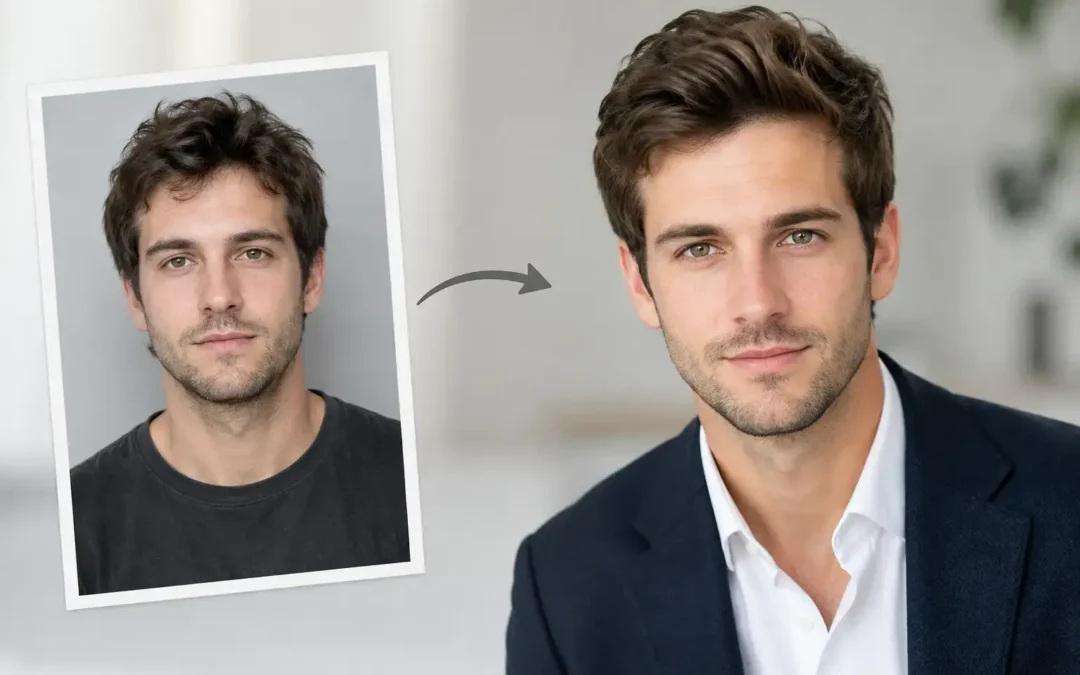
A casting director may spend only a few seconds on your Spotlight profile before deciding whether to look closer. That is why an actor headshot transformation is rarely about a dramatic new look. It is about replacing an image that feels dated, guarded or generic with one that makes your casting potential immediately clear.
The best headshots do not make an actor look like somebody else. They make it easier for the right people to see who is already there: your energy, your playing age, your character range and the roles you could walk into tomorrow.
What an actor headshot transformation really means
A strong transformation begins with clarity, not filters. Perhaps your existing headshot is several years old, taken before a haircut, a change in confidence or a shift in the work you are pursuing. Perhaps it is technically fine but somehow does not feel like you when you arrive in the room. These are common reasons to update.
For actors, a headshot is a professional casting tool. It needs to be current, recognisable and specific enough to create interest, while leaving room for the casting director’s imagination. If you are often described as warm, sharp, mischievous, authoritative or quietly intense, the right photograph can hint at that truth without becoming a performance.
A successful session may produce a subtle change rather than a startling before-and-after. Better light can bring life to the eyes. A more considered crop can create presence. A relaxed expression can replace the fixed smile many people adopt when a camera appears. Small shifts make a remarkable difference when your image is viewed among hundreds of others.
Why a familiar photograph can stop working
It is easy to keep using an old headshot because it once felt safe. Yet casting is based on the person who will walk through the door now. If your hair, facial hair, style, playing age or natural confidence has changed, an older image can create a disconnect before an audition even begins.
The issue is not always age. Sometimes an actor has outgrown a look that was designed to be broadly appealing. A headshot with heavy retouching, fashionable editing or an overly styled outfit can feel less useful than a clean, honest portrait. Casting teams need to see your face clearly, not a version of you competing with the role.
There is also a practical consideration. A phone snapshot may capture a genuine moment, but it often lacks the controlled light, thoughtful direction and high-resolution finish needed for professional casting profiles. Conversely, a highly produced editorial image can be beautiful but not necessarily casting-ready. The balance matters.
The aim is recognition, not reinvention
Your headshot should make someone think, “Yes, that is exactly the person I expected.” That sense of recognition builds trust. It also means you can arrive at an audition without worrying that your photograph has made a promise you cannot fulfil.
This is particularly useful when you are refining your professional direction. You may be moving from student roles into young professional parts, returning to the industry after a break, or finding that your natural casting has broadened. The photographs should reflect the work you are ready to be seen for, not trap you in an outdated idea of yourself.
Preparing for a more natural transformation
The most useful preparation is simple: arrive looking like yourself on a very good day. Choose clothing you feel comfortable and credible wearing, rather than an outfit that is trying to do all the acting for you. Solid colours and considered textures usually keep the focus on your face, while distracting logos, busy patterns and very trend-led pieces can date quickly.
Bring a few options if your session allows it. A change of top, jacket or neckline can gently alter the feel of an image without creating a costume change. Think in terms of casting mood rather than character dressing. A soft knit might feel open and approachable; a structured jacket may bring definition and confidence. Neither is automatically better. It depends on you and the range you want to show.
Hair and make-up should support the same principle. You should look polished, rested and camera-ready, but still immediately recognisable. If you wear make-up every day, a natural version that keeps your skin looking like skin is often ideal. If you do not, there is no need to adopt a heavier look for the camera. Good photography is capable of being flattering without hiding the person in front of it.
The photographer’s role: direction without performance
Many actors feel a surprising amount of pressure in a headshot session. You know how much may rest on the result, so it can be tempting to cycle through expressions or present a catalogue of “types”. Usually, that produces a look that feels effortful.
A specialist actor-headshot photographer creates the conditions for you to settle. The conversation, pace, background, lighting and direction all matter. Rather than asking you to manufacture a mood, an experienced photographer will help you find a responsive, present expression – one where the eyes are engaged and the face is relaxed.
That is where the transformation often happens. Not in a dramatic pose, but in the moment an actor stops monitoring every feature and starts connecting with the lens. The image becomes more direct. It has ease, intelligence and a sense of possibility.
At Henrietta Photography, the focus is on creating polished Spotlight headshots in a calm, approachable setting, so actors can feel supported rather than over-directed. It is a collaborative process, with enough guidance to shape the result and enough space for your own personality to come through.
Choosing images that work for casting
After the session, selection deserves care. The photograph you personally find most flattering is not always the one that works hardest for casting. Look for the image that feels most like you in motion: alert, believable and recognisable. It should hold attention without needing an elaborate expression.
A useful test is to view your shortlisted images at a small size. Casting professionals often first see headshots as thumbnails, where clarity and eye contact matter more than tiny details. If the image still feels alive and distinctive, it is likely doing its job.
You may need more than one final image, especially if your casting range is genuinely varied. However, variety should come from truthful shifts in energy, not from trying to be five different people in one afternoon. A thoughtful selection might include one open, natural image and another with a little more edge or reserve. Keep the set coherent, current and recognisably yours.
Retouching should be discreet. Temporary blemishes can be softened, but permanent features, texture and character should remain. The goal is not perfection. It is a professional photograph that gives a casting director an honest, compelling introduction.
When should you update your actor headshots?
There is no fixed timetable, but a review every year or two is sensible, particularly if you are actively submitting for work. Update sooner after a significant change to your appearance, such as a new hairstyle, visible change in weight, growing or removing facial hair, or a shift in your playing age.
You may also need new images when your career changes direction. An actor who has gained confidence, completed training, joined a new agency or begun being seen for different roles may find that their current headshot no longer represents their strongest professional position. The difference can be felt before it is easily explained: you look at the image and know it belongs to a previous chapter.
Let the image make the introduction easier
A great headshot cannot guarantee an audition, and it should never be asked to carry your entire career. What it can do is remove a barrier. It can help the right casting director pause, understand your potential and want to know more.
The most convincing actor headshot transformation is the one that leaves you looking more like yourself, not less. When your photograph feels current, confident and true, it gives your work the clearest possible place to begin.