A headshot has a rather demanding job to do. It may introduce you to a recruiter before you have spoken, reassure a prospective client that they are in capable hands, or make a casting director pause long enough to look at your Spotlight profile. It needs to be flattering, certainly, but it also needs to be recognisably you.
That is why the question of natural versus retouched headshots is rarely about whether editing is good or bad. It is about choosing an honest, polished version of yourself that suits where the image will be seen and what you need it to achieve.
What a natural headshot really means
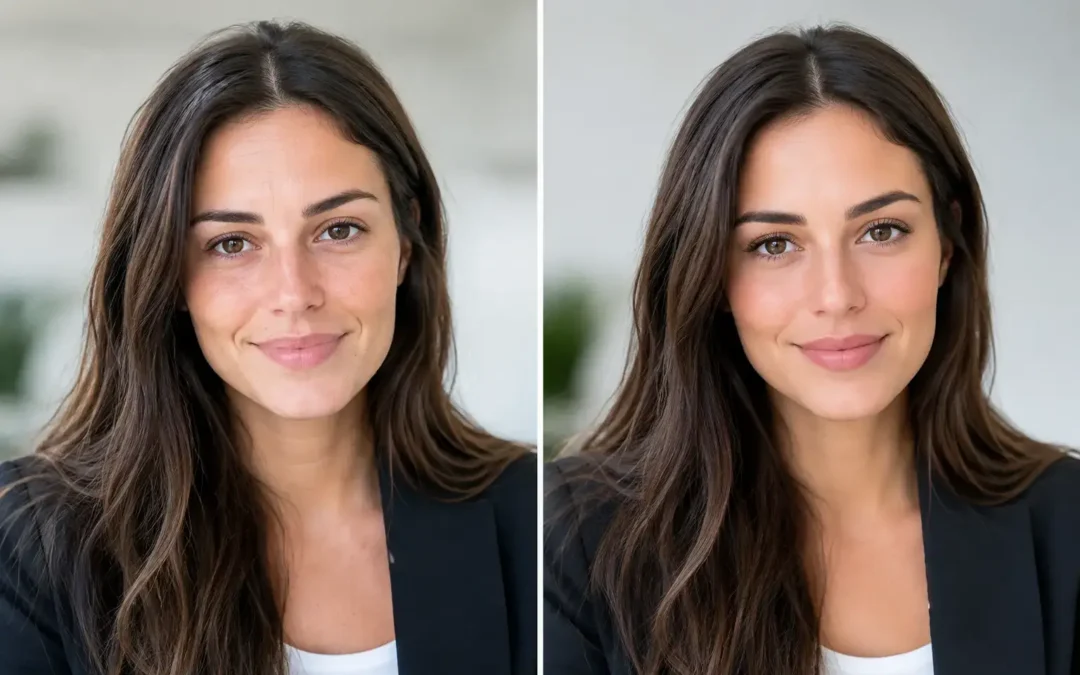
A natural headshot is not necessarily an entirely unedited file straight from the camera. Professional photography involves decisions before and after the shutter is pressed: thoughtful lighting, posing, lens choice, colour correction and careful cropping all shape the finished portrait.
In this context, natural means that the person in the photograph looks like the person who will arrive at the meeting, audition or event. Their skin retains texture. Their features have not been reshaped. Their expression feels relaxed rather than overworked. You look well rested and professionally presented, without looking like a different person.
For many business professionals, this is the sweet spot. A natural headshot suggests confidence and approachability. It gives colleagues, clients and employers an accurate first impression, which is particularly valuable when your photograph appears beside your name on LinkedIn, a company website or a speaker biography.
Natural does not mean unflattering. Good light can soften shadows, bring life to the eyes and create a healthy, even-looking complexion without relying on heavy digital alteration. The most successful portraits often feel effortless because the craft behind them is quiet.
Retouching is not one thing
The word “retouched” can bring to mind smooth, plastic-looking skin and altered facial features. That kind of editing exists, but it is only one end of a very broad spectrum.
Light professional retouching can include removing a temporary blemish, reducing a stray hair, tidying a small mark on clothing or gently balancing redness and under-eye shadows. These adjustments do not change who you are. They simply prevent a passing detail, such as a spot that appeared that morning, from becoming the focus of the image.
More extensive retouching might soften lines, whiten teeth dramatically, reshape a jawline, alter eye size or remove permanent features such as freckles, moles and scars. It can create a highly polished result, but it asks a more significant question: will the image still feel true to you?
There is no universal rule. A portrait for a beauty campaign may require a different finish from a business portrait. An editorial image might call for a more stylised approach, while a corporate team photograph needs consistency across a whole group. The key is to match the level of retouching to the purpose, rather than editing simply because it is possible.
Temporary details versus defining features
A useful way to make decisions is to separate temporary details from defining features. A blemish, small scratch or stray hair will probably be gone in a few days. Most people are comfortable having these softened or removed.
Freckles, laugh lines, a distinctive mole and the natural texture of your skin are different. They are part of the face people know. Removing them can make a headshot feel less personal, especially when a client, colleague or casting professional meets you in real life.
If you are uncertain, ask for a lightly retouched version first. It is much easier to make a subtle additional adjustment than to restore texture and character after too much has been removed.
Natural versus retouched headshots for different goals
The right finish depends on the use of the photograph. A single approach will not suit every client, even if all headshots should be professionally lit and carefully composed.
Business headshots: credible beats flawless
For a business portrait, credibility is often more valuable than perfection. People want to see an intelligent, approachable professional who appears prepared and comfortable in their role. Over-retouching can unintentionally create distance, particularly in industries built on trust, relationships and expertise.
A light touch is usually ideal: balanced skin tone, discreet removal of temporary blemishes and a tidy, considered final image. The goal is not to erase every sign of a busy life. It is to ensure the viewer notices your expression before anything else.
For company teams, consistency matters too. If one person is heavily edited while others are shown naturally, the set can feel uneven. Agreeing a simple, restrained editing standard helps every portrait sit together beautifully on the website or in company materials.
Actors’ headshots: recognition is essential
For actors, the case for a natural finish is particularly strong. A Spotlight headshot needs to help casting professionals recognise you quickly. Your face, playing age, colouring and character should be clear at a glance.
Casting is not a beauty contest. A headshot that removes texture, changes facial structure or makes you look noticeably younger may attract attention for the wrong reason. If you arrive looking unlike your image, it creates unnecessary friction at the very moment you want your performance to do the talking.
That does not mean actors’ headshots should feel severe. A well-directed session can reveal warmth, edge, humour or vulnerability, while sensitive retouching keeps the focus firmly on your eyes and expression. The best result is polished, current and unmistakably you.
Personal branding: consider where people will meet you
Entrepreneurs, consultants and creatives often use a headshot across several places: social profiles, press features, a website, newsletters and speaking engagements. In these cases, think about the gap between your image and your everyday appearance.
A refined portrait can support a premium brand, but it should still feel believable. If you wear glasses daily, it may make sense to wear them in your headshot. If your hair changes frequently, choose a look that reflects how you are most often seen. These details make a personal brand more coherent and help people recognise you when they meet you.
The better answer starts before editing
Many concerns about retouching can be addressed during the session itself. The right photographer will guide you on clothing colours, backgrounds and posture, then use light that suits your face rather than asking editing to rescue an uncomfortable photograph later.
A relaxed expression also makes an enormous difference. When someone feels rushed or self-conscious, they may hold tension around the mouth and eyes. Taking time to settle in, have a conversation and receive clear direction produces an image with more life in it. No amount of skin smoothing can replace that.
Make-up, grooming and wardrobe are worth considering, not because you need to look unlike yourself, but because cameras notice small details differently from the human eye. Matte products can reduce shine, a well-chosen neckline can frame the face, and a simple, well-fitting outfit keeps attention where it belongs.
How to discuss retouching with your photographer
It helps to be specific before your session. Rather than saying, “Can you make me look better?”, explain where the headshot will be used and how you want people to feel when they see it. Do you want to appear warm and approachable, authoritative and senior, creative and energetic, or ready for a particular casting brief?
You can also mention anything you would prefer to be softened, as well as features you definitely want to keep. This is a useful conversation, not an awkward one. A professional photographer should be able to explain what is realistic, make sensitive recommendations and retain the character that makes the portrait yours.
If you have an important deadline, allow enough time for the selection and finishing process rather than expecting an extensively altered image at the last minute. Good retouching is restrained, precise and considered.
Choose polish that still feels like you
The strongest headshot is rarely the one with the fewest lines or the smoothest skin. It is the one that makes someone feel they have already met you: capable, engaging, trustworthy and entirely present.
At Henrietta Photography, the aim is to create gorgeous professional headshots with the care and direction to make you feel at ease, then finish them thoughtfully rather than excessively. Bring the version of yourself you want the world to meet. A good portrait will make sure it is seen clearly.