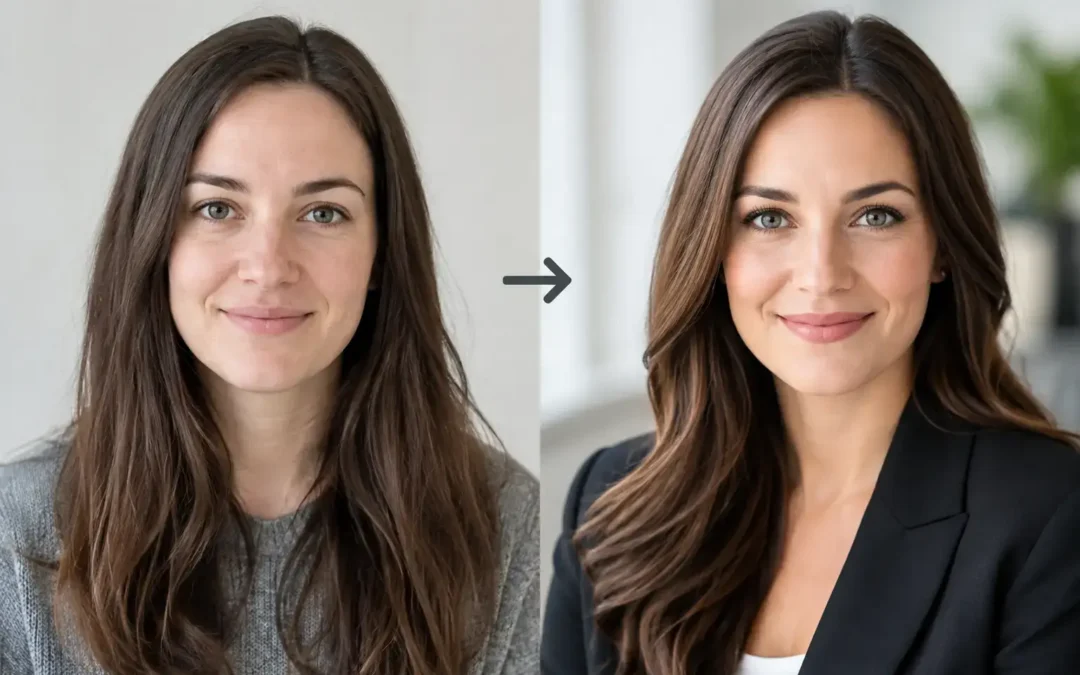
A LinkedIn headshot before after comparison can be surprisingly revealing. It is rarely about turning someone into a different person. The strongest change is usually that the person finally looks like themselves on a good day: approachable, capable and ready for the opportunity they want to attract.
For a recruiter, prospective client or future collaborator, your profile photograph is often the first human moment in an otherwise fast-moving search. A clear, considered business portrait gives people a reason to pause. A rushed selfie, cropped group photograph or out-of-date holiday snap can make an excellent CV, proposal or business feel less considered than it really is.
What a LinkedIn headshot before and after really shows
The ‘before’ photograph often has perfectly understandable origins. It may have been taken at a wedding, in an office with overhead lighting, or against a busy background during a video call. Perhaps it is a few years old, and no longer reflects the person who will walk into the meeting. These images are not necessarily bad photographs. They are simply not designed to do the particular job of a professional profile image.
The ‘after’ image works because several small choices come together. The lighting shapes the face softly and gives the eyes life. The background is calm enough to keep attention where it belongs. Clothing sits well in the frame, and the composition leaves room for the image to display neatly in LinkedIn’s circular crop.
Most importantly, the expression feels believable. A good business headshot does not need a huge grin or a stern, executive pose. It needs to suggest confidence without distance. That balance is why professional direction makes such a visible difference, even for people who usually say they dislike being photographed.
The changes that matter most
Light creates polish, not a false version of you
Unflattering light is one of the main reasons a casual photograph can look less professional than the person in it. Ceiling lights can create shadows under the eyes, while strong sunshine may cause squinting and harsh contrast. A photographer will position and shape light to flatter the face while retaining natural texture and character.
This is not about heavy editing. In fact, excessive retouching can undermine trust, particularly when a profile photograph bears little resemblance to the person attending a call or interview. Gentle finishing may reduce temporary distractions, but skin should still look like skin. A polished image should feel current, credible and recognisably yours.
Expression is guided, never forced
Many people arrive for a headshot believing they are not photogenic. Usually, they have simply never been given clear, reassuring direction. Tiny adjustments to posture, chin position, shoulders and eye line can change the energy of an image dramatically.
A skilled photographer watches for the moment when your expression relaxes. That may be a warm, open smile for a client-facing consultant, or a quieter confidence for a senior leader, solicitor or financial professional. There is no single ‘correct’ LinkedIn expression. It depends on your role, personality and the people you need to reach.
The background gives your profile room to breathe
A background should support the portrait rather than compete with it. A clean studio backdrop is a reliable choice for professionals who want a timeless image that works across LinkedIn, company websites, speaking profiles and press requests. A lightly blurred office or outdoor London setting can suit a founder, creative professional or property specialist who wants more sense of place.
There is a trade-off. Environmental portraits can feel personable and distinctive, but they need careful styling so they do not date quickly or look cluttered in a small profile circle. A simple backdrop is often the more versatile choice when you need one image to work hard across several platforms.
Clothing brings the image together
You do not need to buy a new wardrobe for a headshot session. The aim is to wear something that feels like the professional version of your usual style. Well-fitting clothing in solid or subtly textured colours tends to photograph beautifully, while very small patterns, large logos and overly shiny fabrics can distract from your face.
Consider where the headshot will be seen. Someone applying for a corporate role may choose a jacket, smart knitwear or a tailored blouse. An entrepreneur might prefer a more relaxed but refined look. If you are unsure, bringing two options gives you flexibility without making the session complicated.
When it is time to replace your LinkedIn photo
A headshot does not need replacing every few months. However, it is worth taking a fresh look when your image no longer reflects your appearance, role or ambitions. A promotion, career change, new business launch or return to work are all natural moments to update it.
It may also be time if the image is visibly low resolution, poorly cropped, taken from too far away, or shows you alongside someone who has been awkwardly removed. LinkedIn is a professional space, but it is still personal. Your photograph should make it easy for people to recognise you and feel comfortable getting in touch.
For teams, consistency matters too. A company page with a mix of mobile phone snapshots, old event images and formal studio portraits can feel fragmented. Matching headshots do not mean identical poses or personalities. They simply create a coherent visual standard that reassures clients they are dealing with a thoughtful, established business.
Preparing for a professional headshot session
The best preparation is practical rather than performative. Choose clothes that fit comfortably, check that glasses are clean, and give yourself enough time to arrive without rushing. If you wear make-up, aim for a version that still feels like you. A little more definition than usual can work well under professional lighting, but you should not feel disguised.
Try not to practise a fixed smile in the mirror. It often creates tension. Instead, think about the people you want your profile to speak to and how you would like them to feel when they see it. Calm, capable, welcoming and knowledgeable are useful starting points. During the session, conversation and gentle direction will do far more than rehearsing a pose.
It is also sensible to think beyond LinkedIn. The right portrait can be used for your company biography, email profile, conference introduction, media features and professional directories. Choosing a timeless style and requesting a few variations can give you useful options while keeping your public image consistent.
Why the investment can change how you show up
A professional headshot will not replace experience, a strong portfolio or thoughtful networking. What it can do is make sure your profile supports the work you have already put into your career. When your image feels accurate and polished, you are less likely to hesitate before sharing your LinkedIn link, sending a proposal or introducing yourself to a new contact.
That confidence has a practical effect. People are more inclined to update their profile, write a clearer introduction and be visible when they feel their photograph represents them well. The before-and-after difference is therefore not just visual. It can change how prepared you feel to be seen.
At Henrietta Photography, the aim is always to create a relaxed experience and a portrait with real purpose, not a stiff corporate photograph. The most successful headshots retain individuality while giving clients, recruiters and colleagues confidence in the person behind the profile.
Your LinkedIn photograph is a small square with a big responsibility. Give it the care you would give a first meeting, and let it show the professional people will be pleased to meet.