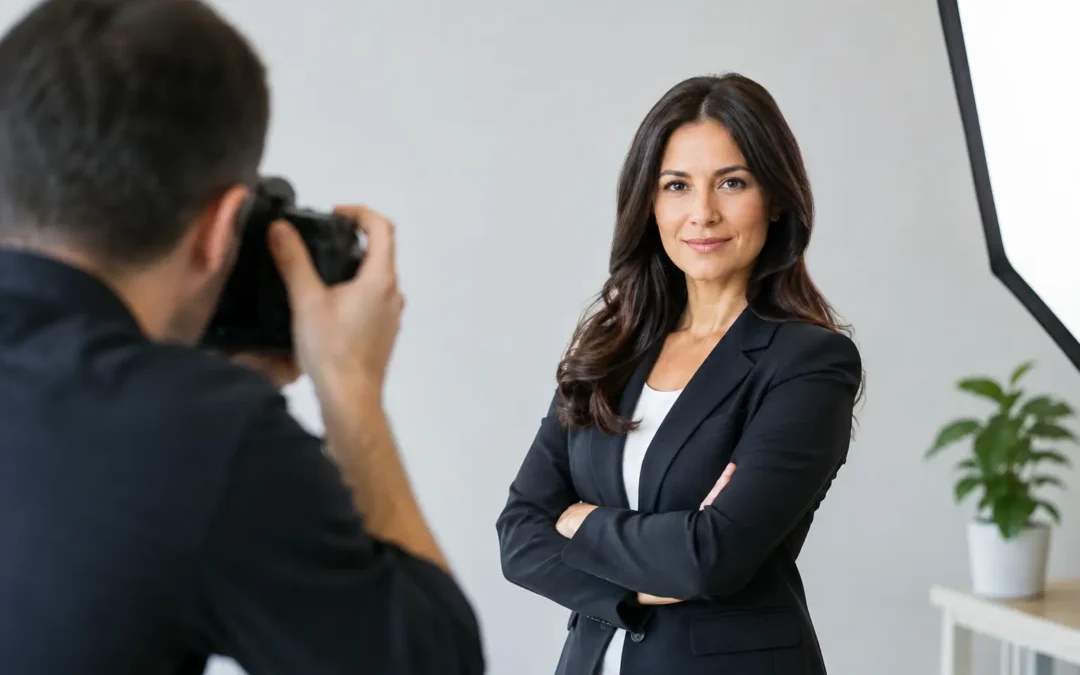
An executive may be entirely comfortable leading a board meeting, presenting to investors or handling a difficult negotiation, then become unexpectedly self-conscious the moment a camera is raised. Knowing how to direct executive portraits is less about giving rigid posing instructions and more about creating enough confidence, clarity and momentum for a person’s natural authority to show.
The strongest business portraits do not simply prove that someone has had a professional photograph taken. They communicate judgement, approachability and presence. For a leadership team, that can shape how a company is perceived on its website, in the press, on LinkedIn and in a pitch deck. The photographer’s direction is what turns a well-lit image into a convincing portrait.
Begin with the role, not the pose
Before suggesting where someone should stand, establish what the portrait needs to achieve. A founder building a personal brand may need warmth and energy. A solicitor, consultant or senior finance professional may need a calmer, more considered image. A creative director might suit a more relaxed composition, while a corporate leadership team usually benefits from a consistent visual language.
A short conversation before the session can answer the useful questions: where will the images appear, who needs to trust this person, and what should they feel on first seeing the photograph? This avoids the familiar problem of producing a perfectly polished portrait that simply does not feel like its subject.
It also gives the sitter a reason for the choices you make. If you ask for a more direct gaze or a quieter expression, explain that it is to create confidence for an annual report or make a team page feel more welcoming. People respond far better when direction has a purpose.
Create a calm, efficient start
Senior people are often working to tight diaries. The first few minutes need to feel organised without feeling rushed. Have the background, lighting and camera position ready before they arrive, then allow a little time for them to settle rather than starting with a command to smile.
A simple introduction works well: explain where they will stand, how long the session is likely to take and that you will guide every detail. Many executives worry they are expected to know what to do. Reassuring them that they do not need to perform removes much of that pressure.
Keep your language positive and specific. Rather than saying, “Don’t look tense,” try, “Let your shoulders drop slightly and bring your weight into your back foot.” Instead of, “That smile looks forced,” say, “Lovely – now let that smile soften just a touch.” The difference is small, but it preserves dignity and keeps the session moving forward.
Direct the body in small adjustments
Most people look more natural when they are not facing the camera square-on. Begin by turning the body a little away from the lens, then bring the face back towards it. This creates shape through the shoulders and avoids the flat, passport-photo feeling that rarely serves a senior professional.
Give one instruction at a time. Asking someone to turn, lower a shoulder, lengthen their neck, change their hands and smile all at once is a quick route to a strained expression. Make the adjustment, take a frame, then refine it.
Feet matter more than many people realise. A slight shift of weight onto one leg can make a stance look composed rather than braced. If the portrait is seated, encourage the sitter to perch towards the front of the chair with their back tall and their feet grounded. Leaning too far back can appear passive; leaning too far forwards can feel overly intense. The right balance depends on the person and the intended use of the image.
Hands deserve attention, particularly in three-quarter portraits. Give them a job: one hand lightly resting on the other, a thumb in a pocket, or hands placed naturally on a desk. Avoid over-styling. Executive portraits should look considered, not theatrical.
Work from posture to expression
A useful order is posture first, then chin position, then eyes and expression. Ask for a long spine and relaxed shoulders before addressing the face. A slight movement of the chin forward and fractionally down can define the jawline, but it must be subtle. Too much and the image looks posed.
For the eyes, encourage the sitter to look at the lens rather than stare into it. Conversation helps. Ask about a recent project, a favourite part of their work or something they are looking forward to. The aim is not to distract them entirely, but to bring life back into their expression between frames.
Help them find the right expression
“Smile” is usually too vague. Executives need different expressions for different contexts, and a wide grin is not automatically the answer. A technology entrepreneur may want warmth and curiosity; a chief executive may need quiet confidence; a partner in a professional practice may need both authority and openness.
Start with a neutral, engaged expression. From there, invite a small softening around the eyes or the suggestion of a smile. This often feels more credible than asking for an immediate broad smile. Review a few frames together if appropriate, particularly with someone who is anxious about being photographed. Seeing that they already look good can change their whole demeanour.
Be careful not to over-direct every expression. A little variation is valuable, but constant instruction can make someone monitor their face too closely. Once the posture and light are working, let the person breathe and take several images through a natural moment of conversation.
Match the direction to the setting
Studio portraits offer control, consistency and a clean, timeless finish. Direction can be more precise because there are fewer distractions. This is often the best choice for large teams, where everyone needs to look as though they belong to the same organisation.
An office setting can bring more context, especially for founders and client-facing leaders. Here, the challenge is to keep the environment supportive rather than dominant. Direct the sitter away from clutter, avoid making them lean awkwardly on furniture, and watch for bright windows or busy backgrounds pulling attention from the face.
Outdoor portraits can feel contemporary and approachable, but London light and footfall are unpredictable. Keep instructions simple, choose a quiet spot, and be ready to work quickly when the expression, background and light come together. The location should add personality, not turn the portrait into a scene.
Keep the team consistent without making them identical
When photographing several senior people, consistency matters. Similar framing, background, lighting and overall energy help a website or brochure feel polished. Yet each executive should still look like themselves. Not everyone suits the same angle, expression or pose.
Use a repeatable setup as your foundation, then make small personal adjustments. One person may look best with a direct gaze and a relaxed half-smile; another may need a slightly more open body position and a brighter expression. Consistency should come from the photographic approach, not from forcing everyone into the same mould.
This is where clear art direction before the shoot is useful. Agree whether the images should feel formal, friendly, editorial or modern, and whether they will be cropped tightly or used with space for text. A portrait designed for a circular profile image needs different framing from one intended for a full-page feature.
Give useful feedback throughout
People relax when they know the photographer is paying attention. Offer genuine feedback as you work: “That position is excellent,” “Your eyes are really engaged there,” or “We have the formal version – let’s now find a slightly warmer one.” It confirms progress without breaking the rhythm.
If something is not working, adjust it quietly and practically. A crooked jacket collar, glasses glare or a hand placed too prominently are technical details, not personal failings. Deal with them matter-of-factly. Your calmness sets the tone for the whole session.
It is also worth photographing more variety than you think you need. A shift in crop, a change from seated to standing, or a few frames looking just off camera can be useful later for editorial layouts and press requests. The core headshot still comes first, but a thoughtful selection gives the client more value from their time.
Let confidence look human
The temptation with executive photography is to chase perfection: the sharpest suit, the most symmetrical pose, the most controlled expression. But the portraits people respond to usually retain a little ease. A genuine spark in the eyes, a relaxed shoulder and an expression that feels recognisably theirs will always carry more weight than a flawless but distant image.
At Henrietta Photography, the aim is to make the process feel straightforward and enjoyable, while giving every client the careful direction needed to look polished and assured. The most effective executive portrait is not one where the subject looks like someone else. It is one where they look ready to be trusted.