
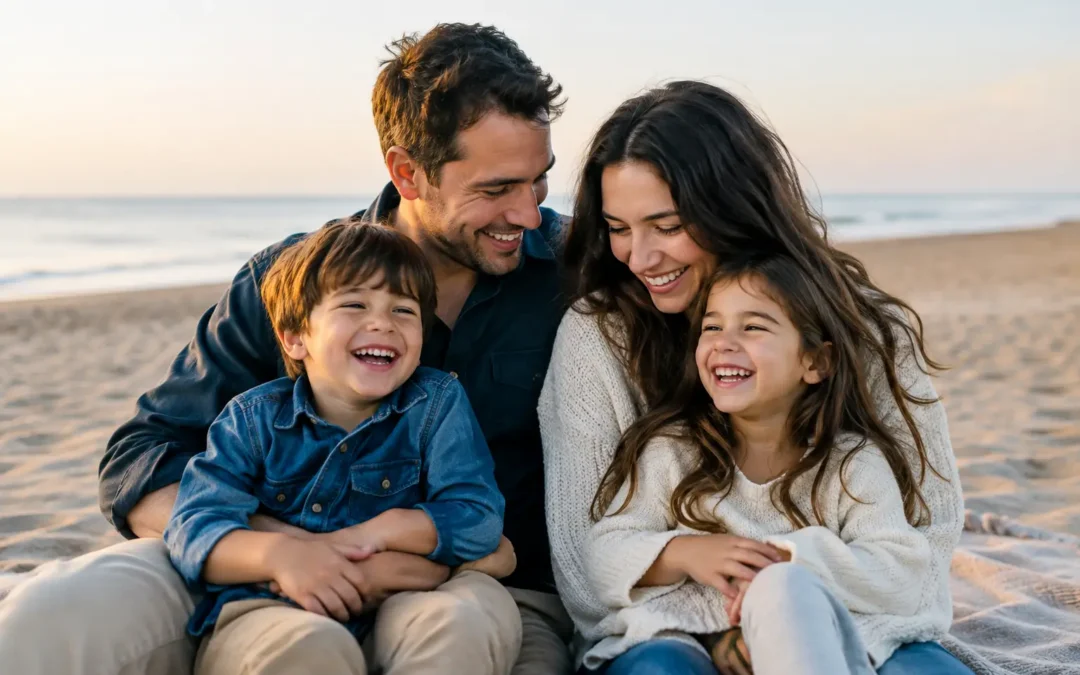
A family photograph rarely becomes precious because everyone was perfectly still. It matters because, years later, you can see the way your child tucked into your side, the laugh that caught everyone by surprise, or the expression you recognise from every ordinary day at home. The best family photography gives those fleeting details the care they deserve, without making your family feel as though they are performing.
For many parents, the idea of a professional session is appealing until they picture the practical reality: getting children dressed, hoping the weather behaves and wondering whether anyone will smile at the right moment. The good news is that a beautiful family portrait does not depend on perfect behaviour. It depends on thoughtful preparation, gentle direction and a photographer who knows how to create a relaxed atmosphere.
What Makes Family Photography Feel Genuine?
A polished portrait and a genuine portrait are not opposites. Good family photography combines both. There should be a few images where everyone is looking their best, naturally arranged and connected. But the photographs that tend to become favourites are often the in-between moments: a toddler reaching for a parent, siblings whispering, or a child giggling at something no one else heard.
This is why the experience matters as much as the final gallery. Children respond quickly to pressure. If they feel they are being told to smile again and again, they may become self-conscious or simply lose interest. A calm photographer works with their energy, allowing time for movement and play while quietly shaping the light, composition and interaction.
Adults benefit from this approach too. Few people feel entirely comfortable the moment a camera is pointed at them. Clear, kind guidance on where to stand, what to do with their hands and how to turn towards the light makes a considerable difference. You do not need to know how to pose. You simply need room to be yourselves.
Plan the Feeling Before the Outfit
Before choosing clothes or a location, think about what you would like the photographs to say about your family. Perhaps you want warm, close portraits that mark a new baby or a milestone birthday. Perhaps your children are at an energetic stage and you would rather have images full of movement and character. Both are valid, and they call for slightly different choices.
A home session can feel intimate and unhurried, especially with young children. Familiar surroundings often help everyone settle, and your home becomes part of the story. A session outdoors gives more room to walk, play and let little ones explore. North London parks, quiet streets and gardens can all work beautifully, provided the setting does not distract from the people in the frame.
Choose a time that suits your children
The best time of day is not always the most fashionable time for photographs. It is the time when your children are generally well rested, fed and happiest. For some families that may be a morning session; for others, an hour before supper works better. If a baby has a dependable nap routine, plan around it rather than asking them to push through.
Leave more time than you think you need to get ready. A rushed arrival can put everyone on edge, while a few quiet minutes to settle in can change the whole mood. Bring water, a familiar snack and, for younger children, one small comfort item. These are not signs that a session is going wrong. They are simply part of family life.
Wear clothes that work together, not uniforms
Co-ordinating outfits need not mean matching outfits. In fact, identical tops can make a portrait feel dated very quickly. Start with a soft, complementary palette and mix tones, textures and layers that feel natural to each person. Neutral colours, gentle blues, greens, rusts and creams often photograph well, but the most important thing is that you feel like yourselves.
Avoid prominent logos, busy slogans and very small patterns, which can draw attention away from faces. Comfort matters just as much. If a child dislikes a scratchy collar or refuses certain shoes, it is usually wiser to choose another option than turn clothing into a battle. A favourite jumper or well-loved pair of boots may say more about this chapter of life than a newly bought outfit ever could.
Let Children Set Some of the Pace
Children do not need to sit still for an hour to create a strong gallery of portraits. In many cases, expecting them to do so is the quickest route to frustration. A well-paced session moves between more composed family photographs and opportunities to walk, cuddle, play or simply talk together.
Simple prompts work better than instructions that feel formal. You might be asked to look at your child rather than the camera, tell each other something silly, or walk slowly while holding hands. These small actions give everyone something to do and create natural expressions without forcing a reaction.
If a child is shy, there is no need to rush them. They may prefer to stay close to a parent at first, watch what is happening or show the photographer a favourite toy. Trust builds quickly when they realise there is no test to pass. If they are full of energy, that can be used creatively too. A little running, spinning or jumping can produce photographs with real personality.
Make Space for the Portraits You Will Frame
Candid images are valuable, but most families also want one or two photographs where everyone is visible, connected and looking towards the camera. These are the pictures grandparents love, the ones that work beautifully in an album and the ones that become part of the visual history of your family.
The secret is not to chase perfection. A strong family portrait might include a child looking away, a hand slightly out of place or a laugh arriving at the wrong moment. Those details do not spoil the image. They often make it more believable. Your photographer will look for flattering light, balanced spacing and genuine connection, then take several frames to allow the moment to settle.
It is worth asking for a little variety. A full family group is essential, but so are smaller combinations: each parent with the children, siblings together and a quiet portrait of the adults. Parents are frequently the ones behind the camera, so make sure there are photographs that show you as part of the family story, not simply the person recording it.
London Family Sessions Need a Flexible Plan
London offers wonderful locations, but it also brings changeable weather, busy pavements and the occasional unexpected noise or crowd. Flexibility is useful. A covered doorway, a bright indoor room or a nearby sheltered area can save a session when rain arrives. Grey skies are not necessarily a problem either. Soft cloud cover can be remarkably flattering and avoids harsh shadows.
For an outdoor session, choose a location with enough visual breathing room. A beautiful background should support the portrait, not compete with it. It also helps to select somewhere convenient rather than travelling across the city with tired children simply for a particular view. The best setting is one where your family can relax.
Choose a Photographer Who Can Direct Without Taking Over
When comparing family photographers, look beyond a portfolio of smiling faces. Notice whether the images feel natural, whether different ages of children appear comfortable, and whether the work has a consistent sense of light and care. You are not only choosing a style of photography. You are choosing the person who will guide your family through the experience.
It is perfectly reasonable to ask how a session is structured, what happens if a child needs a break and how the photographer approaches group portraits. An experienced portrait specialist will have a plan, but will not be rigid about it. The right balance is professional direction with enough breathing space for real moments to happen.
At Henrietta Photography, the aim is to bring that portrait expertise to a warm, personal experience, so families leave with refined images and happy memories of making them.
After the Session, Choose Images for the Life You Live
When you receive your photographs, do not judge them only by whether everyone is looking at the camera. Look for the images that make you feel something. The tiny hand on a shoulder, the mischievous grin, the way your family naturally gathers together – these are often the photographs that grow more meaningful with time.
Think about how you would like to enjoy them. A framed portrait can transform a hallway or sitting room, while an album gives children something tangible to revisit as they grow. Digital files are useful, but printed photographs have a different presence. They become part of the home, seen not only on special occasions but in the ordinary moments that family life is made of.
There may never be a completely calm week, a spotless home or a day when everyone is in an ideal mood. That is not a reason to wait. Bring your family as they are, allow a little room for the unexpected, and let the photographs preserve the connection that is already there.